

Originally published by Shaun Maguire @shaunmmaguire on X.
View original article
· View original post
· 2026-03-23T15:06:45.000Z
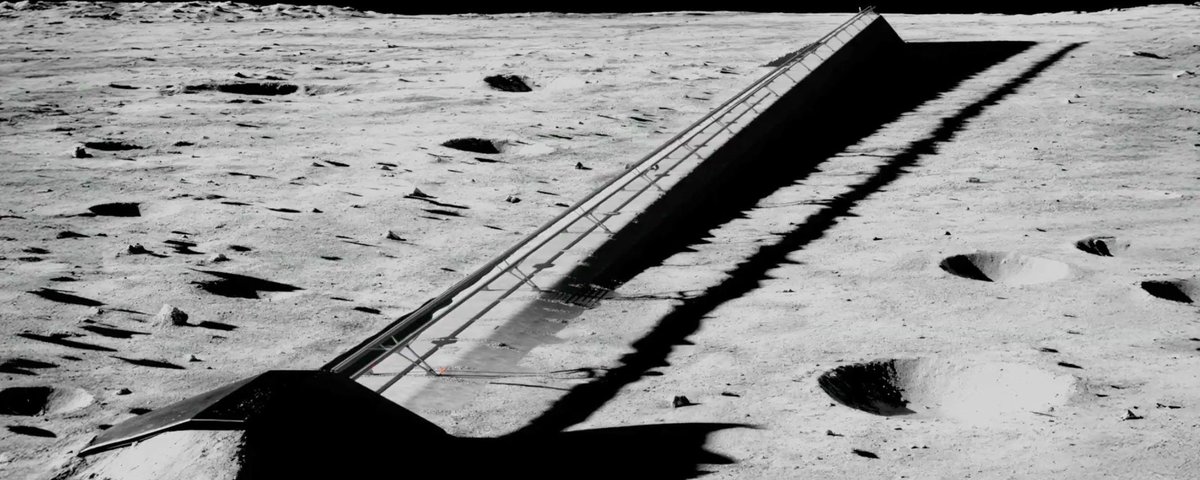
People are sleeping on Elon… again. And especially on xAI.
What appears as chaos is actually the whiplash of reprioritization after clearing a bottleneck. Such as the abrupt focus on Starlink after making Falcon 9 *reliably* reusable in 2018. The pattern of chaos is part of an inexorable march to victory.
Five years ago, people thought of Elon as a technologist. Today, after years of pervasive and intense narrative manipulation, he is viewed as a political figure. That impression is wrong.
Elon is always trying to find the biggest bottlenecks holding back humanity’s technological progress. Sadly politics became the limiting factor towards making life interplanetary, building humanoid robots and AGI.
The entrance into politics was an undesirable but necessary step to push our collective future forwards.
This article is going to run through some history which provides context for the present and the future. I feel extremely confident that Elon is going to win.
This may be disappointing as people love controversy, but Elon + xAI winning, doesn’t mean the other frontier labs will lose. I believe most of them will win as well.
Digital intelligence is one of the biggest markets ever (physical intelligence might end up being bigger).
But first, some caveats:
These are my personal views, not Sequoia’s.
This is definitely not investment advice. Sequoia backs SpaceX, xAI, and most Elon companies—I led those investments, so I’m biased.
This post only uses public information.
1) Elon has a history of seeing the future
As the attacks against him ramped up, people forgot the shocking level to which he has repeatedly anticipated the future. Don’t bet against the guy who:
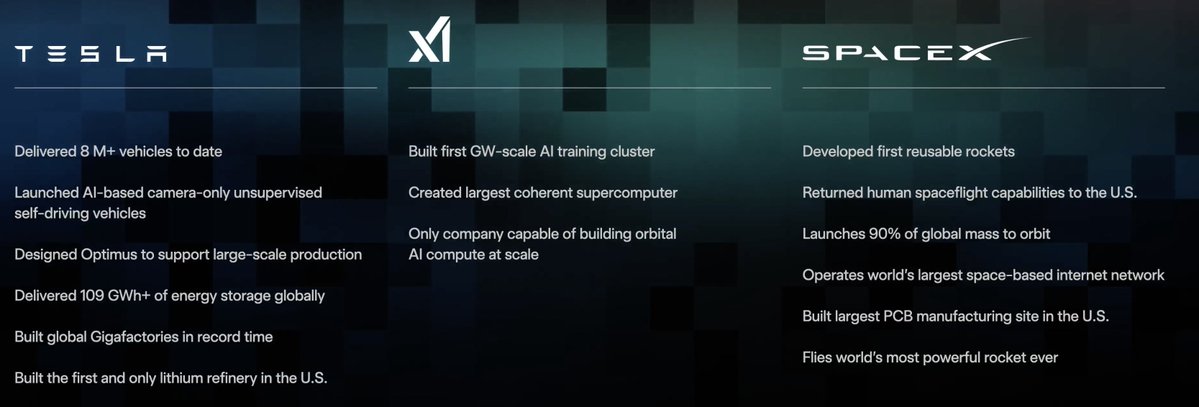
That said, this doesn’t mean that Elon is always right. The way I think about this is that for wildly non-obvious technology bets, Elon has the best intuition in the world. He’s probably right about 80% of the time. But these are way out of the money ideas like “computer vision only” or “reusable rockets” or “AlexNet = a path to AGI”. And then the 20% of the time where his intuition is wrong, he rapidly alters course when the data changes.
Without going into the details, here’s a reminder of just a handful of the big technology bets he has gotten right:
He understood what was happening with battery densities and basically single handedly ushered in the EV era with Tesla
He helped create the digital money era with PayPal
He understood that reusable rockets were both necessary and possible. It’s hard to explain how non-obvious this was
In the early days of self driving cars there was a huge debate of (vision only) or (vision + lidar). The vision only camp was the minority camp at the time. Elon saw the future 10 years before it was obvious
These are surface level anecdotes. Because this post is about xAI, let’s walk through some of his history in AI.
This is my personal read of the situation from being on the periphery of AI for almost 20 years now (I’ve dabbled around AI since 2007 Stanford stats grad school, when it was still boring.)
2) Elon’s history in AI
Elon may not be the person that was hands on keyboard making the biggest contributions to AI, but at the same time, there are only a very small number of people who have a track record like his for internalizing the big moments while they were happening and seeing around corners (Larry Page early on, Jensen Huang, Ilya Sutskever, Demis Hassabis come to mind but not many more).
Not only does he recognize the breakthroughs that matter, he has a history of acting on them in real time.
AlexNet in 2012
Modern AI should be separated into the pre-AlexNet and post-AlexNet eras. The AlexNet results came out in October 2012. To the relatively small number of people paying attention, it was shocking. Neural networks had been around for decades but they had stalled out. It was basically a research backwater. And then AlexNet showed that if you make them “deep” by throwing a huge amount of compute (for the first time in the form of GPUs rather than CPUs) and data at them then you can obtain a gigantic performance improvement.
The exact timelines for Elon aren’t clear but it seems he instantly understood the significance of AlexNet and by May of 2013 it was reported that Tesla was “considering adding driverless technology to its vehicles.”
If you go back to the pre AlexNet era, AI was broken into two distinct philosophical camps. Statistical learning vs Bayesian learning. After AlexNet, in my opinion, AI divided along new lines: vision vs language (computer vision vs NLP). After AlexNet, vision was in a renaissance, and language was in what turned out to be a short lived lull.
There was a casual debate at the time around if the best pathway to AGI was via vision or language? Nobody knew for sure but in 2013 it seemed like vision was the most promising.
To use an analogy from biology. Imagine the following thought experiment. Imagine you have 1000 humans born with eyesight, but all of their other senses are impaired. And now imagine you have another 1000 humans who are born with hearing, but no vision and no other senses. Which group will learn faster?
The rough consensus at the time was that the vision only approach would be a faster path towards general intelligence.
But there’s another important variant. Imagine the same thought experiment but you add in touch as well. So (vision + touch) vs (language + touch). Biological learning rates are *much* higher when you have the ability to interact with your environment rather than just passively sensing it.
My view is that Elon deeply grokked these concepts and set a roadmap for Tesla:
Step 1: go all in on computer vision (with scale) to solve self driving
Step 2: use this to generate lots of money and build the best vision model in the world. Then go to Humanoid Robots / Optimus which lets you add in touch / interactive feedback. This should 10x the learning rate
Step 3: either this gets you AGI or find another step beyond Optimus
As far as I can tell, this was the plan and it was arguably the best AGI roadmap available in this era (with Google also having a strong roadmap both then and still now).
Deep Reinforcement Learning in late 2013
In December of 2013 Deepmind published “Playing Atari with Deep Reinforcement Learning”. The same way that AlexNet was a revolutionary jump in classification, this was a revolutionary jump in reinforcement learning (RL). Neural networks were invented in the 1950s and RL a few years later. But both techniques had stalled out until their “deep” counterparts.
Again, Elon instantly internalized this significance and tried to buy Deepmind. He lost the bidding war to Google, who also immediately understood the monumental RL breakthrough. The Google Deepmind acquisition was announced only 38 days after this paper came out. It’s wild how quickly both Google and Elon moved here.
But guys… we’re looking at this timeline with hindsight bias.
Put yourself in Elon’s shoes in December 2013. Tesla’s market cap at the time was $18B. The Falcon 9 had just completed its 7th successful flight and launched its first private commercial payload. The dude was grinding on production at Tesla and the beginning of making money with Falcon 9… but he was also paying attention to all the biggest breakthroughs in AI and instantly internalizing their significance + acting on them.
A lot of the young kids in AI today didn’t live through this timeline and it’s just hard to explain how much Elon understood in real time.
OpenAI ‘s founding in 2015
For a bunch of reasons I’m not going to go into many details here. But as a reminder, Elon co-founded OpenAI in late 2015. My interpretation of the original mission was to: 1) be the place for breakthrough, long-term, AI research and 2) try to make sure AGI is “safe” for humans.
Transformers in 2017
Google Brain’s paper “Attention Is All You Need” came out at NIPS in 2017 (also known as the “Transformer” paper). This was a revolution on the language side of AI.
AlexNet : Computer Vision :: Transformers : Natural Language Processing
To be honest, I’m not aware of Elon making a big change on the back of this result in the same way he did in the other major AI moments.
One interpretation is that even with this language breakthrough, he was still confident that vision was the path to AGI.
Another possibility is that this came at a horrible time, during the peak of production hell at Tesla (late 2017 to early 2018). Which was simultaneously a pivotal moment at SpaceX, where they were making Falcon 9 booster landings reliable. Or maybe it was something else, I don’t know. But it does appear he initially missed the abrupt transition from vision to language.
ChatGPT in 2022
ChatGPT was released to the public on November 30th, 2022. xAI was founded on March 9th, 2023.
I don’t know what happened in the 3 months between those two events but my guess is that Elon changed his thinking and viewed language as a likely pathway to AGI (while maintaining his vision roadmap at Tesla). This was back to the old swift and decisive Elon. Recognizing the seminal events in real time and making bold bets instantly.
Scaling Laws
Another one of the most important ideas in AI over the last 15 years has been scaling laws. OpenAI put out a paper in 2020 that made waves in the field and made this idea popular. Many of these authors went on to start Anthropic. They definitely internalized something deep.
But I personally don’t think scaling laws had a definitive date the same way the other events did. Larry Page was redpilled on something like scaling laws back in 2007. And I think Elon had a similar realization around then. If not, he definitely did at the start of Tesla’s autopilot and in the early OpenAI emails. It’s another major concept that he was early to internalize.
Larry Page (Google’s founding CEO) knew it back in 2007
“When AI happens, it’s going to be a lot of computation and not so much clever Blackboard, whiteboard kind of stuff, clever algorithms, but just a lot of computation.
My theory is that if you look at your programming,… pic.twitter.com/ithNr9p2Pd
— Rohan Paul (@rohanpaul_ai) March 18, 2026
As a reminder, those were just a subset of examples where Elon made giant calls in AI and usually got it right. THAT WAS WHILE HE WAS RUNNING A CAR COMPANY, A ROCKET COMPANY, A TUNNELING COMPANY AND A BRAIN COMPANY. The point is… Elon has a history of seeing the future.
2) Elon focuses on a small number of things at once
I think this is an essential lens through which to view what’s happening at xAI right now.
My impression of how Elon runs his companies is that he focuses on only 1-3 key things at once. His attention follows an exponential drop off with something like 70% of his focus on Priority 1, 20% on Priority 2 and 10% on the rest. Once Priority 1 is on a good path it seems like a giant whiplash to the public as his attention shifts to a new priority.
I put the paragraph above into Grok and asked it to make a timeline for SpaceX using this framework. This is pretty damn good! I’ll go into detail on Starlink.
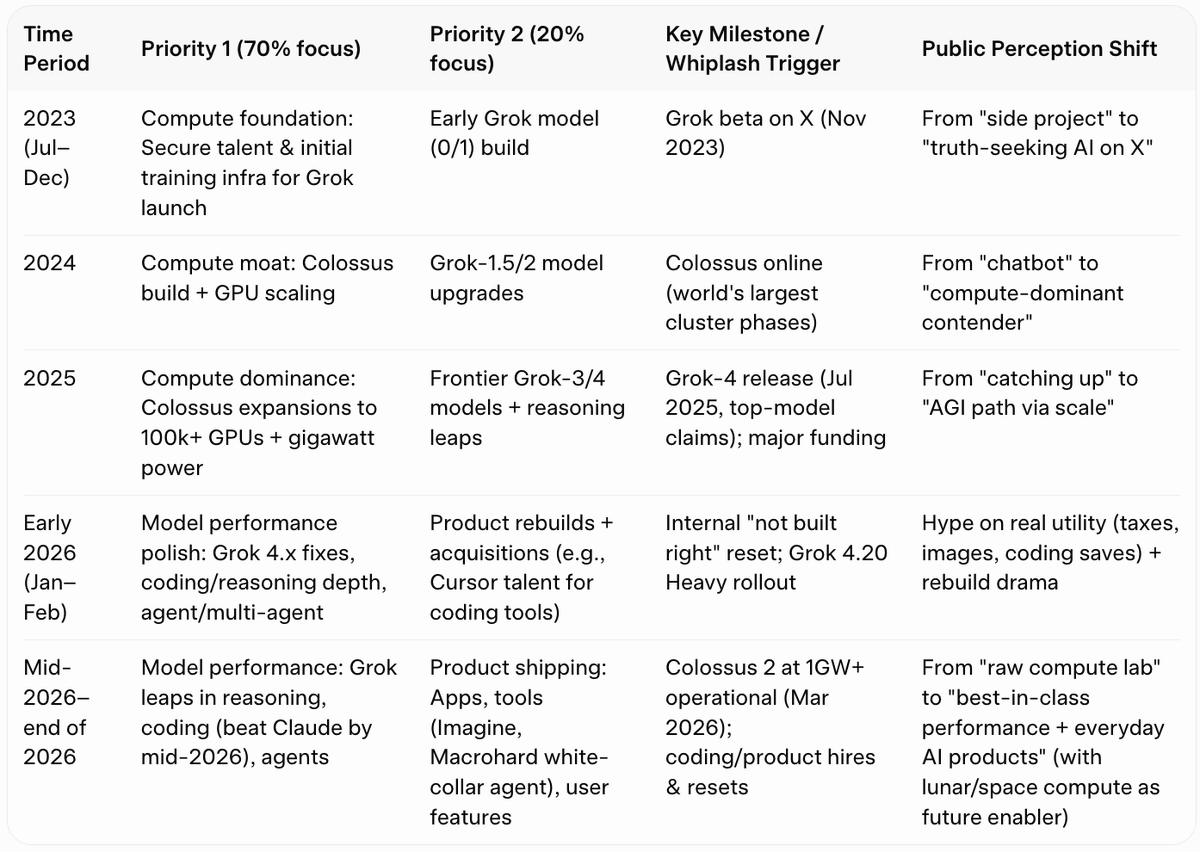
I had many friends working on Starlink during the 2018-2020 period so I got to hear some of the inside baseball as all of this went down and will use it as an example. Here’s my rough take for how this all happened.
The first Falcon 9 booster successfully landed in December 2015. 2016 and 2017 were all about making reusability reliable. By late 2018 reusability was on a “good path” so that bottleneck was gone. MASSIVE. Now the company gets to work seriously on Starship and Mars. But these will have a bottleneck which is cash. So now it’s time to work seriously on Starlink.
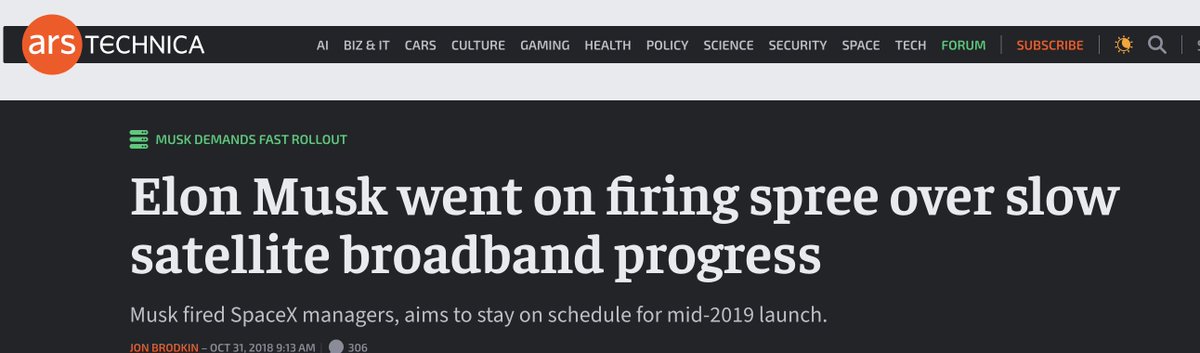
Elon got serious about Starlink sometime in early to mid 2018. My interpretation is that he wasn’t paying much attention to it before then, he was rightfully focused on Falcon 9 reusability. But shortly after focusing on Starlink he realized the team… just wasn’t good enough. He flew up to Redmond, Washington where they were based and fired the entire senior leadership.
After this move, Elon moved some of his star young performers over from the rocket side and they quickly made the impossible happen. Starlink was chaotic for about two years on the back of this and then it became a self-sustaining monster. After a supply chain delay on the back of Covid, user terminal production was happening in a large tent in a parking lot in Hawthorne. From reboot to revenue in about two years. Wild.
What the outside world viewed as chaos, was actually a newfound focus. What looked like losing, was not even trying. This is a common pattern in Elon companies. Call it the whiplash of reprioritization.
For fun, here is Grok’s summary of Tesla’s priorities over time. Tesla has had some moments that were similar to the Starlink story above. Tesla Model 3 “production hell” in 2017-2018. And two reboots of Autopilot/FSD. The first in 2016 after Tesla and Mobileye ended their partnerships and then in 2021/2022

Likewise the Neuralink founding team was 9 people. Of these 9 people only two are still left: Elon Musk and DJ Seo. There was a period in 2020 and 2021 where about six of the founding team members departed from the company. Again, this appeared highly chaotic on the outside. But with hindsight this was the phase transition from science/R&D to having a clear direction and scaling product. After 2-3 years of extreme turbulence, Neuralink has been operating smoothly for the last few years, and in fact it seems to be thriving.
Now let’s apply this framework to xAI. To the outside world things look chaotic right now. Of the 12 founding team members, more than half have departed over the last year. xAI is currently behind Anthropic and OpenAI in terms of coding and revenue. Many view this as xAI being hopelessly behind.
I view this differently. My impression is that Elon’s #1 focus at xAI was compute. The #2 focus was getting as close as possible to the frontier in terms of model performance.
xAI’s compute is now on an accelerating path to dominance. I know that many would disagree with me. Google has incredibly impressive data center hardware, for example their MEMs based optical switches and TPUs. Elon just tweeted:
Google will win the AI race in the West, China on Earth and SpaceX in space
— Elon Musk (@elonmusk) March 19, 2026
My interpretation of this tweet is that Google will have the most scaled compute on Earth in the West. China will have the most scaled compute on Earth (in part due to their massive lead in solar). And SpaceX will have the most compute in space. Ultimately, Space will win.
The key point though is that with Colossus 2’s progress + SpaceX’s confidence in orbital data centers + SpaceX’s hardware execution ability (#1 in the world IMO), I think just in the last 3 months Elon flipped from compute being the #1 xAI priority to now feeling like it’s in a good place.
My read is that the top two priorities at xAI are now: models and a new priority: product.
On the product point. I’d argue that Claude Code was the first real AI product. Everything before that was just an interface. The “product” was an incredible backend with the simplest possible front-end. ChatGPT fits this pattern, breakthrough backend accessed by a simple prompt interface. For the first time with LLMs, Claude Code took a model and turned it into something greater than the sum of its parts.
An analogy would be Google in the early days. The original Google Search wasn’t a product. It was a genius ultra elite backend exposed to the public via the simplest possible interface: a white webpage with a little search box.
Google did a fantastic job building moats around this over time with everything from Android as an operating system to Chrome to giving away the best email service for free (gmail) to SSO to collaboration products like docs and drive etc. IMO Claude Code was the first step away from AI being just powerful backends exposed via prompt interfaces to something deeply entangled and sticky.
IMO the combination of compute getting on a good path and products emerging in AI, all in the last quarter, caused a massive reprioritization at xAI.
To the outside it looks chaotic, but as with Starlink in late 2018, it’s just a shift of priorities and a newfound laser focus. The same way rocket reusability became “solved” in 2018, compute is on a glide path. Models + product are the new priorities.

3) Reinforcements are coming
Google is 27 years old. OpenAI is 10 years old. Anthropic is five and a quarter. And xAI is just over three years old.
Bear with me for a second. What if xAI was playing a different game?
While others were focused on code, Elon was focused on compute. While others were focused on next year’s roadmap, Elon was focused on building a long-term advantage.
xAI has reinforcements coming over the next few years. Here are some of them.
Starlink’s free cash flow
This is the simplest to explain. Starlink is one of the most beautiful businesses that has ever existed. Its sister, Direct to Cell, should be just as good if not better. Direct to Cell already has over 8M active users but it won’t really ramp until it has: Starship launching v3 satellites + chipsets in phones being optimized for SpaceX’s spectrums. I believe that Starlink + Direct to Cell will be to SpaceX/xAI what Search was to Google.
Space Compute
I know that this sounds like the plot of a bad movie. But it’s the future. I also know that people are skeptical.
I believe the math here more than pencils. I think it will be phenomenal. I have done a systems level analysis here, similar to the one I did for Starlink starting in late 2019 (which led to a $600M investment in mid 2020). My math is a tad worse operating margins than Starlink but in what’s likely to be the largest market ever. I can’t wait to share deeper thoughts.

In the meantime, without endorsing any of these numbers, this is roughly the right way to think about space compute.
Space compute distilled
Manufacture a 3 ton satellite with 100kW compute for $4m
At $300 per kg it costs $1m to launch
At $12b per GW in terrestrial compute competition the satellite can pull in $1.2m per year
3 to 4 year payback with the additional year before orbital decay… https://t.co/q3FqsysHTn
— Brett Winton (@wintonARK) March 20, 2026
In my opinion, for SpaceX, the worst case scenario is owning a next-gen cloud business. Basically selling inference tokens for other model providers with roughly a 30% operating margin, in a many trillion dollar market. But I don’t think we’ll live in the worst case scenario.
Terafab
The combined partnership of Tesla + SpaceX + xAI just announced Terafab. This is one of the most ambitious projects in human history. This is a vertically integrated project designed to produce 1 TW/year of chips.

I will just say that many of the intermediate steps here are low risk and will still be extremely additive across these companies, in the very near term.
Owning the supply chain is everything. That is Terafab.
Tesla’s Optimus
Learning rates are higher when you add in the ability to interact with your environment. This is the physical world manifestation of reinforcement learning. Tesla’s FSD is effectively passive: you’re trying not to hit anything. Optimus will be active, drop a glass, watch it shatter, and learn.
Elon is the best positioned to make the jump to physical AI.
4) Conclusion
Elon is locked-in on a level that no other scaled company CEO has ever been before.
It’s impossible to comprehend the work ethic without seeing it. He’s working at the limits of what human biology can handle. He’s the first 4 Star General scaled company CEO equivalent to live in the trenches with his troops, around the clock, for a sustained period.
The narrative engineers want you to see distraction and decline. But what’s actually happening is a convergence of multiple decades long roadmaps into an acceleration unlike anything we’ve ever seen.
Space, chips, energy and AI are all coming together. Elon is a leader in all of these fields.
xAI will win. The magnitude of its victory will be unprecedented. Unimaginable even. And I don’t believe it will be zero-sum. We will all win. This is the biggest pie expansion moment in history.
Never bet against Elon. And buckle up. At least until we upload (I’m half-joking.).


