

Originally published by JOEY @JoeyTweeets on X.
View original article
· View original post
· 2026-03-07T12:16:55.000Z
In a slow-motion crisis of legitimacy rather than a dramatic collapse, the internet is uniquely dangerous to the people running the system. Not because it enables violent revolution, but because it enables accurate accounting.
The “protect the kids” campaign isn’t what it looks like. It never is.
Let’s start with the thing nobody says out loud.
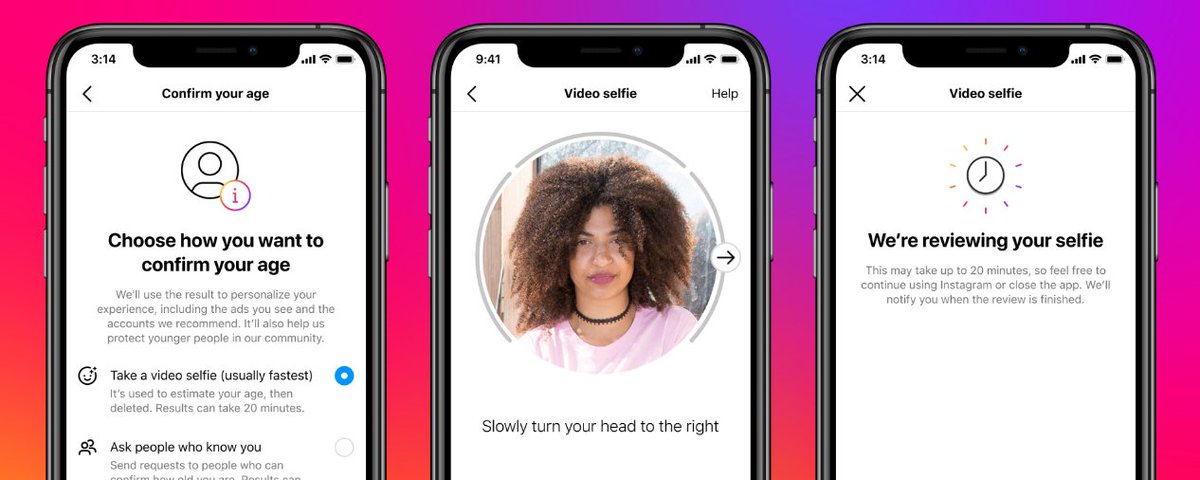
Australia just made it illegal for a fifteen-year-old to have a Reddit account. To enforce that, every adult in the country must now prove who they are. Uploaded government ID, facial biometric scans, bank account linkage, behavioral inference. Just to access a platform where someone might post a funny picture of their dog. The law targets children. The surveillance infrastructure targets everyone.
The United Kingdom’s Online Safety Act is already live, requiring age verification across social media, search engines, video platforms, messaging apps, and dating services. Half the United States, twenty-five states as of September 2025, now mandates age verification for content platforms. France is building a national age-verification app. The European Commission wants a digital minimum age of sixteen across the entire EU. Denmark, Norway, Spain, Slovenia, Malaysia: all moving in the same direction, on roughly the same timeline, citing roughly the same reasons.
This didn’t happen because every government on earth simultaneously read Jonathan Haidt’s book and decided to do something about it.
Something else is happening. Watch where the infrastructure lands, not who it’s nominally aimed at.
The Greatest Trick Governments Ever Pulled
The most effective political maneuver of the modern era is not the lie. Lies get caught. The effective maneuver is the emotionally irresistible reframe: take an action that serves power and dress it in the clothes of something that serves the vulnerable.
You cannot be against children. That’s the whole point. The moment a legislative package gets the word “children” in its title, the political calculus shifts entirely. You’re no longer arguing policy. You’re arguing against mothers who lost their daughters to Instagram-enabled bullying. You’re arguing against gut-wrenching suicide statistics. You’re arguing against the image of a twelve-year-old at two in the morning, alone, spiraling through an algorithm that has mapped her neurological vulnerabilities with terrifying precision.
In November 2024, Australian Prime Minister Anthony Albanese cited a personal letter from Kelly O’Brien, whose twelve-year-old daughter Charlotte took her own life after being bullied at school. The letter was read on the floor of parliament. The bill passed in eight days. Eight days, for legislation mandating biometric verification infrastructure across the entirety of Australia’s internet. The Senate didn’t even wait for the proposed twelve-week consultation period.
That is not the speed of genuine deliberation. That is the speed of a pre-made decision looking for an emotional cover story.
This playbook has a long pedigree. The Communications Decency Act of 1996 was sold as child protection and struck down by the Supreme Court as a First Amendment violation. The PATRIOT Act was sold as terrorism prevention and deployed against drug offenses, political activists, and journalists. The War on Drugs was sold as protecting communities and functioned as a mass incarceration machine that targeted Black Americans with surgical precision. Every serious expansion of state power in the modern era has arrived wrapped in the language of protection.
The question to ask, every single time, is not what does this law claim to do? The question is what does this law actually build?
Read the Infrastructure, Not the Press Release
Australia’s Online Safety Amendment (Social Media Minimum Age) Act 2024 mandates that “age-restricted” social media platforms, currently Facebook, Instagram, TikTok, YouTube, Reddit, X, Snapchat, Threads, Twitch, and Kick, take “reasonable steps” to prevent under-sixteens from holding accounts. Sounds targeted. But “reasonable steps” is defined to include facial age estimation via selfies, inference from behavioral data, uploaded government identification documents, and linked bank account details. Companies face fines of up to AU$49.5 million for non-compliance.
Parents cannot give consent to override the ban. Children cannot appeal it. And the list of affected platforms has no ceiling. Australia’s eSafety Commissioner has explicitly stated “there will not be a static list” of restricted services. Pinterest was initially excluded. Twitch was subsequently added. The mechanism is designed for expansion.
Look at what happened in the United States when age verification laws took effect in Florida. VPN demand surged by 1,150 percent, per Electronic Frontier Foundation research. The New York Center for Social Media and Politics confirmed that teenagers did not stop accessing restricted content. They migrated to offshore platforms operating outside any regulatory framework, with zero child safety infrastructure. The law’s stated purpose, protecting children from harmful content, produced the exact opposite outcome.
Legislators know this. The data from earlier-adopting states was available before later states passed their own versions of the same laws. Researchers published it. Digital rights advocates testified about it. Courts cited it in injunctions. Governments passed the laws anyway.
You don’t keep building something that doesn’t work for its stated purpose unless it’s working for a different purpose.
That purpose is the creation of a verified-identity layer on top of the internet. A system where access to the digital public square requires authentication. Where your online activity is, at minimum, linkable to your real identity, by platforms, by verification vendors, by governments with subpoena power, and by whoever eventually hacks the databases.
A third-party vendor handling Discord’s UK identity checks was hacked in late 2025. Approximately 70,000 users’ government ID photos were potentially exposed. Australia suffered major data breaches at Qantas in 2025, MediSecure in 2024, and Medibank in 2022. Freedom House estimates 81 percent of the world’s internet users live in countries where people have been arrested or imprisoned for social media posts about political issues. This is the world you’re building a biometric database into.
Late Stage Fiat
“Late stage capitalism” doesn’t cover where we actually are. That framing assumes the system is still fundamentally capitalist, just corrupted by excess. Late stage fiat (from my friend @MasaSonCap) is more precise.
Late stage fiat is what happens when the monetary system built after 1971, when Nixon severed the dollar’s last link to gold and the world’s reserve currency became a managed promise, reaches the end of its productive runway. The debt-to-GDP ratios stop being theoretical problems and start being operational ones. The gap between official inflation statistics and the lived experience of purchasing power grows too large to paper over with communication strategy. Interest on the debt begins to crowd out the spending that kept the population’s consent softly purchased.
The United States government paid $1.1 trillion in interest on the national debt in fiscal year 2024, more than it spent on defense. The Congressional Budget Office projects debt held by the public will reach 116 percent of GDP by 2034 and keep climbing. Canada, the UK, France, and most of the EU are running comparable dynamics with less capacity to absorb them, because none of them control the world’s reserve currency. Canada’s federal debt hit $1.4 trillion in 2024, while Bank of Canada data shows the median Canadian household’s real wage has been essentially flat for fifteen years. The average house in Toronto costs 12.7 times the average annual household income. In 1990, that ratio was under four.
These are not the statistics of a system that needs adjustment. These are the statistics of a system in managed decline, held together by monetary expansion that also explains why your groceries cost 40 percent more than they did in 2019, why your rent is unaffordable, why young people increasingly don’t bother trying to own property, start families, or buy into institutions that used to reward participation.
Late stage fiat is the slow redistribution of real wealth upward through the Cantillon Effect, the economic principle named for eighteenth-century economist Richard Cantillon, which holds that newly created money benefits those who receive it first, before prices adjust, at the expense of those further down the chain. The central bank creates money. The banks get it first. Asset-owners benefit. Wage-earners absorb the price increases. The gap widens. The system grows increasingly extractive. The population grows increasingly restless.
And the restless population has the internet.
The Cantillon Effect on Information
Richard Cantillon described the uneven flow of new money through an economy. The same dynamic runs through information. When the institutional apparatus, governments, central banks, legacy media, credentialed experts, controlled the channels through which information moved, they collected an informational Cantillon premium. The narrative reached the population pre-shaped. Dissent existed at the margins, was expensive to produce and distribute, and could be largely contained.
The internet broke this. Not gradually, either. Rapidly, and then all at once. The marginal cost of publishing fell to zero. The marginal cost of reaching a global audience fell to near-zero. The gatekeeping apparatus, the editors, the broadcasters, the publishers, the institutional credentialing mechanisms, became optional for anyone willing to do the work. Millions of people were willing.
The results were catastrophic for institutions that had depended on informational advantage. Every major credibility collapse of the past decade, weapons of mass destruction in Iraq, the 2008 financial crisis, COVID policy contradictions, central bank inflation forecasting failures, the Canadian government’s invocation of the Emergencies Act to freeze the bank accounts of truckers, was amplified, analyzed, and archived by a distributed population that could no longer be managed by simply declining to cover it.
So the institutions tried content moderation. Partnership programs with platforms. “Misinformation” labels. Regulatory pressure: the Biden administration pressured Facebook to censor COVID-related humor and satire, a fact Zuckerberg testified to before the House Judiciary Committee. The EU’s Digital Services Act, per documents obtained by the House Judiciary Committee in 2025, was used to pressure TikTok and other platforms to censor “coded statements,” “media presented out of context,” and “misrepresent[ed] authoritative information,” categories that in practice mean material that makes EU institutions look bad. These internal documents showed TikTok systematically censoring true information globally to comply with the European Commission’s demands.
None of it worked well enough. As long as anyone could create an anonymous account and post anything, the supply of inconvenient information was essentially unlimited. You could whack one mole and a thousand others would appear.
Better content moderation doesn’t solve that. Identity verification does. Make anonymity technically impossible and dissent becomes practically costly. The person who would post an anonymous criticism of central bank policy will think twice when posting requires linking their government ID.
No conspiracy required. Just institutional logic. And the “protect the children” frame is how you implement it without triggering the political resistance that would arise if you announced the actual policy.
A Fourth Turning, Just Slower and More Annoying
William Strauss and Neil Howe identified a recurring cycle in Anglo-American history: roughly every eighty years, following a sequence of High, Awakening, Unraveling, and Crisis, a society is forced through a crucible that destroys old institutions and births new ones. The Fourth Turning is the Crisis phase, total war, depression, revolution, the moment when the contradictions of the previous era become unsustainable and something breaks.
The framework maps onto history with uncomfortable precision. The American Revolution, the Civil War, World War II, and by Howe and Strauss’s original timing, a fourth crisis due roughly in the 2005-2025 window. They were right about the timing. They may have been wrong about the drama.
Late stage fiat produces not a shattering crisis but a managed slide. Not the Bang but the long Whimper. Gradual institutional decay, declining living standards absorbed slowly enough to prevent the critical mass of desperation required for genuine revolution, the grinding down of expectations until a generation doesn’t know what it lost because it never had it.
The Fourth Turning without the reset. The Crisis phase prolonged by the monetary system’s ability to paper over its own failures, borrowing against the future, inflating away the debt, keeping the lights on just long enough to prevent the torches from coming out. No single moment is catastrophic enough to serve as the hinge. Everything gets slightly worse, year by year, while the official statistics report manageable growth.
The Unraveling goes permanent. Institutional trust continues to fall: 32 percent of Canadians trust the federal government, per Edelman’s 2024 Trust Barometer, down from 53 percent in 2020. Social cohesion frays. Birth rates decline. Substance use, chronic illness, financial precarity, and political nihilism all trend in the same direction. The population gets angrier, but the anger stays diffuse, channeled into culture wars rather than structural demands, managed by a media ecosystem designed to generate heat without light. Don’t even need to mention that Canada will have killed more than 100,000 of its people by the end of 2026 through the MAID program.
In a slow-motion crisis of legitimacy rather than a dramatic collapse, the internet is uniquely dangerous to the people running the system. Not because it enables violent revolution, but because it enables accurate accounting. It’s the ledger that can’t be revised. The memory that can’t be managed. Every broken promise gets documented. Every contradicted statistic gets cross-referenced. Every exposed hypocrisy gets amplified. The system can survive being wrong. It cannot survive being wrong and everyone knowing it simultaneously.
The internet must therefore be restructured. Not eliminated; that would be too obvious, too authoritarian, too quickly recognized for what it is. Restructured. Made traceable. Made accountable. Made safe, not for children, but for narratives.
The Anonymity Destruction Pipeline
Watch the sequence.
It starts with children, because children are the population everyone agrees needs protection, and because starting with children lets you build the infrastructure before extending it to adults. This is explicit in how the Australian law is structured: the eSafety Commissioner can expand the list of restricted platforms at any time, and the verification infrastructure built to comply is not age-specific. It verifies everyone.
In the United Kingdom, the Online Safety Act, framed as a child protection measure, applies to social media platforms, search engines, video-sharing sites, cloud storage, dating apps, and messaging boards. It requires removal of content deemed “harmful to children” and “legal but harmful” material. Those categories are defined by Ofcom, the UK’s communications regulator, a government-appointed body. The law does not restrict itself to under-sixteens. It governs what adults can access.
In the United States, Michigan and Wisconsin have proposed legislation to ban VPNs, the tools people use to circumvent age verification. Meaning these states want to criminalize privacy tools because they allow users to route around surveillance. Stanford University researcher Riana Pfefferkorn put it plainly in Wired: “Age verification impedes people’s ability to anonymously access information online. That includes information that adults have every right to access but might not want anyone else knowing they’re consuming.”
In Vietnam, a December 2024 law requires social media users to authenticate their accounts with government-issued ID documents or mobile phone numbers subject to real-name registration. An authoritarian government’s law, structurally identical to what Australia, the UK, and the European Commission are building. The difference is that Vietnam didn’t bother with the “think of the children” framing.
Freedom House recorded internet freedom declining globally for the fifteenth consecutive year in 2025. Twenty-eight of the seventy-two countries it assessed got worse. The tool used most consistently by governments to suppress online dissent was identity verification, connecting online activity to real identities, making the cost of posting the wrong thing a cost paid in the real world.
The infrastructure being built in liberal democracies today, in the name of child safety, is the same infrastructure authoritarian governments use for political control. The architecture is identical. Only the stated purpose differs.
The Mental Health Argument: Taking It Seriously, Then Defeating It
Jonathan Haidt’s The Anxious Generation makes a real case. The correlation between smartphone adoption and youth mental health deterioration is documented and concerning. Between 2010 and 2020, rates of anxiety, depression, and self-harm among adolescents, particularly girls, rose sharply across the United States, UK, Canada, and Australia, roughly tracking the mass adoption of social media. The harms are real and deserve serious policy responses.
The policy response enacted is identity verification of the entire internet.
Haidt recommends smartphones out of schools, age limits on app store downloads enforced at the device level, and phone-free childhood norms enforced socially and institutionally. Targeted interventions that address children’s relationship with devices without requiring biometric databases of every adult internet user. The Australian and British governments passed laws that do none of those things.
A Pew Research survey from April 2025 found 74 percent of teenagers said social media made them feel more connected to their friends, and 63 percent said it gave them a place to express their creativity. The statistic universally cited to justify bans, that social media harms teens’ mental health, refers to approximately 14 percent of teens reporting harm, a figure the survey’s own headline misrepresented as “roughly 1 in 5” when the actual number is closer to 1 in 7.
An Australian poll in November 2024 found 77 percent supported the social media age limit. That same poll found only 25 percent believed it would work. By December 2025, confidence in the law’s effectiveness had fallen to 33 percent, while VPN usage among teenagers had spiked. The kids got around it. Of course they did. Teenagers have been getting around restrictions since restrictions were invented. The law produced not a protected generation but an identity verification mandate affecting every Australian adult on the listed platforms.
The people hardest hit by anonymity destruction are the ones anonymity was actually protecting. For LGBTQ+ youth, for young people in rural communities, for teenagers whose home environments are unsafe, the anonymous internet has been a lifeline, the one space where they could find information, community, and support unavailable in their immediate physical world. Age verification laws, by requiring minors to authenticate through parents or government systems, eliminate precisely this population’s access to precisely this resource. Many U.S. states mandate abstinence-only sex education. The internet is many teenagers’ only access to accurate reproductive health information. That access disappears when the internet requires a government ID.
The people most helped by anonymity destruction are the people who found anonymity inconvenient.
The Sovereign Individual Thesis Plays Out
In 1997, James Dale Davidson and Lord William Rees-Mogg published The Sovereign Individual, predicting with unusual specificity what would happen as digital technology matured. The nation-state would lose its monopoly on violence, taxation, and information control. Cryptography would allow individuals to store and transfer value without government intermediation. The internet would destroy information monopolies. The most productive individuals would become effectively stateless, owing loyalty to no single government and paying taxes to none.
Davidson and Rees-Mogg were called utopians and dismissed by serious people. They were also substantially correct about the mechanism.
Bitcoin is the most concrete expression of the Sovereign Individual thesis in existence. It’s money that can’t be inflated by central bank decree, a ledger that can’t be revised by institutional fiat, value stored outside the banking system that froze Canadians’ accounts in February 2022 for the crime of donating to a trucking protest. The Cantillon Effect systematically transfers wealth from wage earners to asset owners through monetary expansion. Bitcoin is the first functional opt-out from that mechanism accessible to anyone with an internet connection.
Late stage fiat cannot coexist indefinitely with an anonymous internet. Bitcoin is surveillance-resistant because it’s pseudonymous. As long as someone can create an unverified wallet and transact without identity linkage, Bitcoin maintains its core property as bearer money, money that’s yours because you hold it, not because an institution permits you to access it. The moment internet access requires identity verification, every Bitcoin address becomes, in principle, linkable to a real identity. The pseudonymity that gives Bitcoin its sovereignty-preserving properties dissolves. Ignore the Chamaths and the Dalios.
The online anonymity war and the war on hard money are the same war, fought on different fronts by the same institutional logic: the nation-state apparatus defending its relevance, its revenue base, and its monopoly on the narrative of what is happening to ordinary people’s material lives.
Anti-money-laundering regulations targeting cryptocurrency tightened globally in the same period that age verification laws were being passed, not coincidentally, but as parallel expressions of the same project. The European Union required crypto exchanges to collect identity data on all transactions in 2024. FinCEN proposed rules that would require verification of self-custodied wallet owners. These are sold as anti-crime measures, the “think of the criminals” frame that is the financial equivalent of “think of the children.” The infrastructure built is an identity layer on top of value transfer, mirroring the identity layer being built on top of information access.
Destroying financial pseudonymity and destroying online anonymity are the twin pillars of the late-stage fiat response to its own legitimacy crisis.
Where the Decay Goes
The Fourth Turning framework offers a terminus: the crisis resolves, old institutions collapse, new ones get built, and the cycle begins again. Something breaks loudly enough that everyone agrees something broke.
Late stage fiat offers a different terminus, the version where everything stays nominally intact. The elections still happen. The newspapers still publish. GDP still grows at 1.8 percent annually. The substance beneath the surface hollows out. The currency continues to exist but purchasing power doesn’t. The constitution continues to exist but rights don’t. The social contract continues to be invoked but not honored.
The surveillance infrastructure gets built gradually, each piece presented as a reasonable response to a genuine problem. Child protection today. Counter-terrorism tomorrow. Financial stability the day after. The categories of “harmful content” that platforms must suppress under laws like the UK’s Online Safety Act expand with each review cycle, incorporating new definitions of harm that conveniently track whatever the current government finds inconvenient. The eSafety Commissioner’s power to add platforms to Australia’s banned list “at any time” is a legislative mechanism designed for scope creep. It is working as designed.
The endpoint of this trajectory is not North Korea. It’s closer to the EU model of managed speech: a nominally free internet where the boundaries of acceptable discourse are set by regulatory bodies insulated from democratic accountability, where deviating from approved narratives is not illegal but simply more costly, riskier, technically harder, and economically disadvantaged. You can still say what you think, technically. But everyone knows who said it, and that knowledge produces its own chilling effect.
A society where everyone knows speech is monitored is a society where people self-censor. That is the goal. Not silence; silence would be too obvious, too easily recognized as tyranny. Self-censorship. The ambient awareness that your words are linked to your identity, that your identity is in a database somewhere, that databases get hacked and subpoenas get issued and careers get ended over things said on the internet years ago.
The person most likely to keep their mouth shut is the person with something real to lose: the professional, the parent, the property owner, the person embedded in institutions. The person most likely to keep speaking is the person with nothing to lose. Late-stage fiat’s surveillance infrastructure ultimately produces a public discourse dominated by the dispossessed and the ideologically committed, while the broad middle retreats into private silence.
This outcome is documented in authoritarian contexts worldwide. It’s being built in democracies, in the name of children, while most of the population approves in polls because the polls ask the wrong question.
The polls ask: Do you support protecting children from social media harm? Seventy-seven percent say yes in Australia. Of course they do. The right question is: Do you support a biometric identity verification layer on the internet, maintained by private vendors with demonstrated breach histories, that links your real identity to your online activity, accessible to governments with subpoena power, in perpetuity? That poll has not been commissioned.
The Counter the Powerful Don’t Want You to Make
A version of the “protect children online” argument exists that is serious and doesn’t require destroying anonymity. Parental controls at the device level, not the network level. Age verification enforced at the app store, where the check is between a parent and Apple or Google, not between every adult and every platform they access. Social media companies treated as product liability defendants when their design choices demonstrably harm minors, creating financial incentives to actually fix the problem rather than perform compliance theater.
Technologists, civil libertarians, and child safety advocates with real expertise have proposed all of this. It’s politically less popular because it doesn’t produce the infrastructure that is the actual goal.
Haidt himself has said device-level and school-level interventions are the priority. The Australian government’s own commissioned data showed 96 percent of children aged ten to fifteen were on social media before the ban, a penetration rate making clear that the platforms were not the primary access point, and that blocking platforms wouldn’t address the underlying dynamic. The kids have the devices. The devices are the problem. The legislation targets the platforms.
Not an oversight. A choice.
The Electronic Frontier Foundation’s Erica Portnoy, a senior staff technologist, said it plainly: “You’ll find that the greatest proponents of age verification are those whose greatest concern is control.” She called the social media panic “today’s satanic panic,” a moral hysteria serving institutional interests while producing no actual benefit to the population it claims to protect.
The mechanics track. The satanic panic of the 1980s produced no witches but many ruined lives, teachers, daycare workers, and innocent people destroyed by prosecutions built on moral hysteria. The child social media panic will produce no safer children but a great deal of surveillance infrastructure. The children it claims to protect will use VPNs. The adults who never questioned the premise will wonder why nothing changed for kids while finding, gradually, that something changed for them.
What to Watch
The tell is always in the expansion.
When the categories of “age-restricted” platforms expand beyond social media to messaging services, then to search engines, then to news sites, note the moment. When the minimum age threshold for protected status gets raised from thirteen to sixteen to eighteen, note the trajectory. When proposals emerge to verify identity at the ISP level rather than the platform level, note what that means architecturally. When VPN bans get proposed, already happening in Michigan and Wisconsin, note what function VPNs serve, and for whom banning them is convenient.
Watch what happens in the UK when the Online Safety Act’s “legal but harmful” provisions get operationalized. Watch which content gets categorized as harmful. Watch which political speech ends up adjacent to the categories that platforms must suppress. The act’s initial enforcement will be careful and defensible. The second and third rounds will be less so. This is how these things always go.
The EU’s proposed digital minimum age of sixteen is worth watching closely. If it passes, the identity infrastructure required to enforce it across twenty-seven member states, with free movement of people and data between them, will be the most comprehensive real-name internet system ever built outside of China. It will be sold as a child protection measure. The architecture will be capable of considerably more than that.
The cryptocurrency parallel runs on the same timeline. The jurisdictions moving fastest on social media age verification are moving fastest on crypto identity requirements. The United Kingdom, Australia, and the European Union are leading on both fronts simultaneously. That is not a coincidence worth dismissing.
When the debt becomes truly, operationally unmanageable, when the slow-motion fiscal crisis in the United States, Canada, the UK, and EU member states produces not just austerity but the kind of raw policy failure that no communications strategy can contain, that is the moment when the surveillance infrastructure stops being a background hedge and becomes the primary tool of social management.
As nation-states grow less able to deliver the value that justified their existence, capable individuals will route around them through technology, jurisdictional arbitrage, hard money, and encrypted communication. The nation-states know this. The surveillance architecture is the response, not to children on Instagram, but to the adults who are starting to understand what late stage fiat means for their material lives, who have the internet, and each other, and the ability to make that understanding go somewhere uncomfortable.
Late Stage Fiat’s Most Honest Sentence
The mechanism here is more sophisticated than a “governments are evil” frame warrants. People pushing these laws include genuine believers in child protection. The mental health data is real. The harms of poorly designed social media on adolescent development are not fabricated.
But good intentions, assembled into bad policy by institutional logic that runs below the level of conscious strategy, still produce the outcome the institutional logic requires. No conspiracy needed. Just a bureaucracy with incentives, a political class with a legitimacy problem, a monetary system running out of runway, and a technology that threatens the informational advantages that kept the whole edifice plausible.
The children are not the point.
The children were never the point.
The children are the reason you don’t push back. They’re the reason the polling is seventy-seven percent in favor in Australia even as fifty-eight percent don’t believe it will work. People can hold both beliefs simultaneously: this probably won’t help kids, but I feel like a monster opposing it. That cognitive dissonance is the policy’s most important feature. It’s designed into the legislation’s framing the same way the Cantillon Effect is designed into monetary expansion: not announced, but functioning.
What’s being built is an internet without anonymity. An internet where access requires identity. An internet where speech is free in the technical sense, you can say what you want, unless an algorithm flags it, unless a regulator decides it’s harmful, unless a court issues a takedown, unless your employer sees it, unless a future government decides that what you said in 2026 constitutes something it prefers to call a crime.
That internet can’t host the kind of accountability journalism, dissident speech, financial privacy, and political organizing that has made the past twenty years of the web, for all its chaos, genuinely threatening to concentrated power.
That’s not a bug. That’s the product.
The question for anyone who has read this far, anyone who uses pseudonymous accounts, anyone who holds Bitcoin, anyone who has said something true and impolitic without wanting their employer to see it, is not whether to believe this analysis. It’s what to do with it.
The Sovereign Individual’s answer is to build the infrastructure for a world that doesn’t require their permission. Pseudonymous identities on platforms that don’t demand government IDs. Self-custodied money on networks that don’t depend on banking system goodwill. Encrypted communication that no subpoena can reach. Decentralized publishing that no regulator can single-pointedly disable.
None of this is illegal yet. Note the word “yet.”
The window between “technically legal” and “regulated out of existence” is open. The “protect the children” legislation is designed, among other things, to close it. Not overnight. Gradually. In the way that late stage fiat does everything, without a hinge moment, without a dramatic break, without the kind of obvious crisis that would mobilize the resistance that might actually change the outcome.
Just a slow, semi-controlled decay. A managed slide into a world where the internet works like a shopping mall, surveilled, curated, monetized, and administered, rather than a public square.
They’re using your children to build it.
The least you can do is notice.
(Very Loose) Bibliography
Australian Parliament. Online Safety Amendment (Social Media Minimum Age) Act 2024. Parliament of Australia, passed November 29, 2024. Effective December 10, 2025.
Bloomsbury Intelligence and Security Institute. “Australia’s Social Media Ban: A Test for Global Digital Governance.” BISI Report. January 2, 2026. https://bisi.org.uk
Built In. “Social Media Bans for Children Are Expanding Worldwide.” December 2025. https://builtin.com/articles/social-media-bans-children
Built In. “Age Verification Is Taking Over the Internet.” 2025. https://builtin.com/articles/age-verification-laws-us-internet-debate
CATO Institute. “Australia’s Under 16 Social Media Ban: A Warning for Online Speech and Security Around the World.” December 10, 2025. https://www.cato.org/blog
CNBC. “Australia on Wednesday became the first country to formally bar users under the age of 16.” December 10, 2025. https://www.cnbc.com
Congressional Budget Office. The Budget and Economic Outlook: 2024 to 2034. Washington: CBO, February 2024.
Data Matters Privacy Blog (Sidley Austin). “Children’s Privacy in 2026: From Australia’s Under-16 Social Media Ban to a Shift Beyond Notice-and-Consent in the United States.” February 13, 2026. https://datamatters.sidley.com
Davidson, James Dale, and Lord William Rees-Mogg. The Sovereign Individual: Mastering the Transition to the Information Age. New York: Simon & Schuster, 1997.
Edelman. 2024 Edelman Trust Barometer: Canada Report. Toronto: Edelman, 2024.
Electronic Frontier Foundation. “10 (Not So) Hidden Dangers of Age Verification.” December 31, 2025. https://www.eff.org/deeplinks/2025/12/10-not-so-hidden-dangers-age-verification
Electronic Frontier Foundation. “Age Verification Threats Across the Globe: 2025 in Review.” December 28, 2025. https://www.eff.org
Electronic Frontier Foundation. “The Year States Chose Surveillance Over Safety: 2025 in Review.” January 9, 2026. https://www.eff.org
Foundation for Individual Rights and Expression (FIRE). FIRE Report on Social Media 2024. Philadelphia: FIRE, 2024. https://www.fire.org
Freedom House. Freedom on the Net 2025: An Uncertain Future for the Global Internet. Washington: Freedom House, 2025. https://freedomhouse.org
Haidt, Jonathan. The Anxious Generation: How the Great Rewiring of Childhood Is Causing an Epidemic of Mental Illness. New York: Penguin Press, 2024.
House Judiciary Committee (Republicans). The Foreign Censorship Threat, Part II. Washington: U.S. House of Representatives, February 3, 2026.
ITIF. “Political Pressure on Platforms Undermines Free Speech.” January 15, 2026. https://itif.org
Marketplace (APM). “Age-verification requirements for social media spark new privacy concerns.” Interview with Kian Vesteinsson, Freedom House. February 26, 2026. https://www.marketplace.org
Pew Research Center. “Teens and Social Media: Key Findings.” April 2025. https://www.pewresearch.org
Reason.com / Elizabeth Nolan Brown. “The Age-Gated Internet Is Here.” July 28, 2025. https://reason.com
Salon. “Social media age verification is full of risks and unclear rewards.” February 11, 2026. https://www.salon.com
Statistics Canada. Household Debt and Net Worth in Canada, 2024. Ottawa: Statistics Canada, 2024.
Strauss, William, and Neil Howe. The Fourth Turning: An American Prophecy. New York: Broadway Books, 1997.
Tech Policy Press. “Free Speech Standards and Social Media Age Restrictions in Australia and the US.” December 15, 2025. https://www.techpolicy.press
Tuta. “Age Verification: What Countries Require You to Perform ID Checks and for What Websites and Platforms?” February 2026. https://tuta.com/blog/age-verification-kills-anonymity
U.S. Department of the Treasury / Office of Management and Budget. Historical Tables: Budget of the U.S. Government, FY2025. Washington: OMB, 2024.
Wikipedia. “Online Safety Amendment (Social Media Minimum Age) Act 2024.” Updated March 2026. https://en.wikipedia.org/wiki/Online_Safety_Amendment
Wikipedia. “Social Media Age Verification Laws in the United States.” Updated March 2026. https://en.wikipedia.org/wiki/Social_media_age_verification_laws_in_the_United_States
Yahoo News / TechCrunch. “These are the countries moving to ban social media for children.” March 2026. https://www.yahoo.com/news/articles/countries-moving-ban-social-media
YouGov / Sydney Morning Herald Resolve Political Monitor. Australian polling on social media ban, November and December 2024.


